Your tills, bookings, phones and door access all rely on one thing: a connection that stays up. We design, install and manage connectivity for businesses with one site or hundreds, choosing the right mix of connections for each location. With Pulse, you can see exactly how every line is performing.
connectivity

connections that keep your business moving
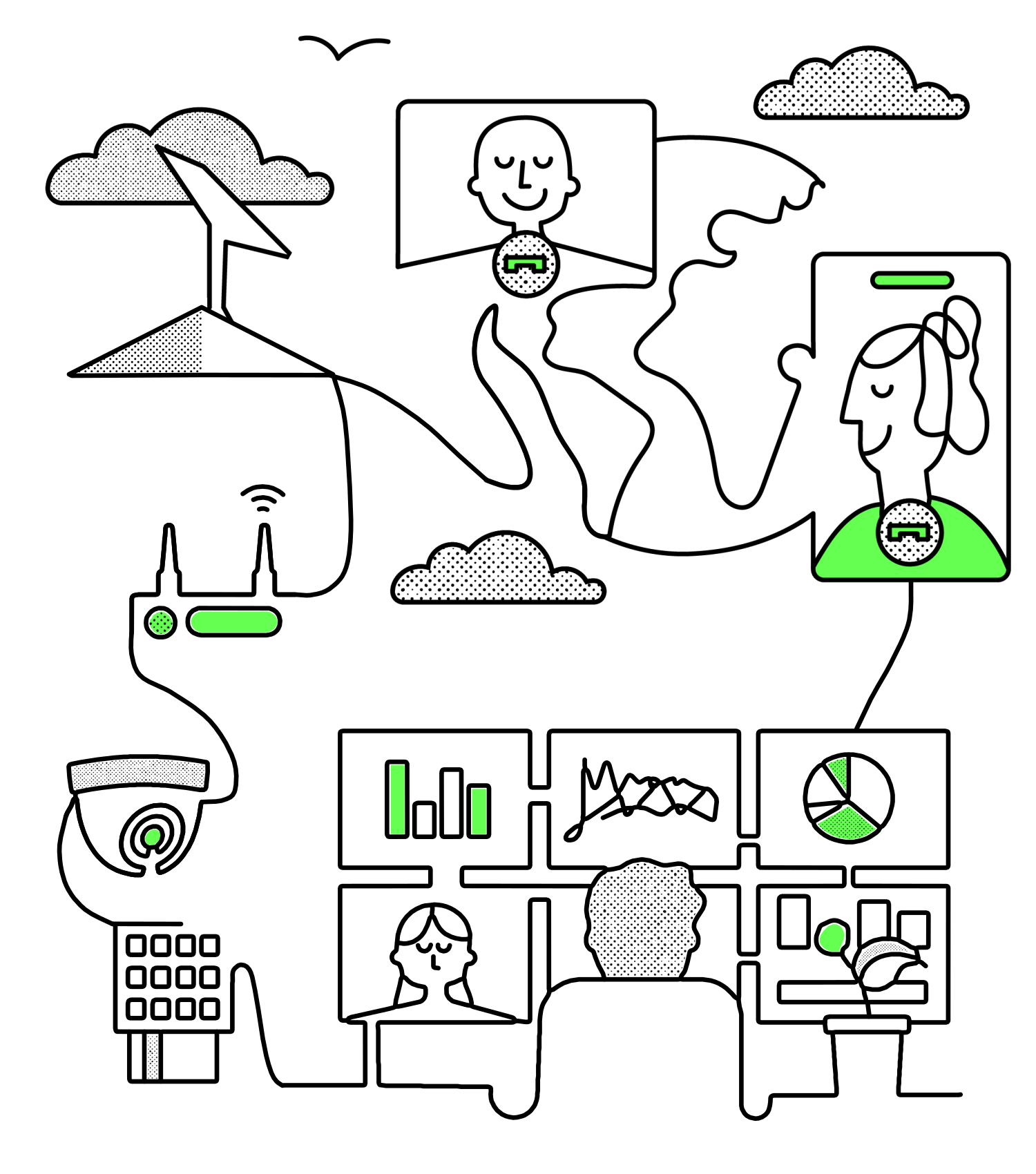
The right mix of connections for each site, chosen for availability, speed and cost, with backup where it matters.
SoGEA
Broadband without the old phone line. Where full fibre isn’t available yet, single order generic Ethernet access (SoGEA) gives you a reliable connection that’s ready for the PSTN switch-off, with calls handled over the internet.
private networks (MPLS & IPVPN)
An IP virtual private network (IPVPN) links your sites privately, keeping your traffic off the public internet, and many run on multiprotocol label switching (MPLS). If you’re already on one, we can help you move to SD-WAN at your own pace.
Starlink satellite
Starlink’s low Earth orbit satellite brings fast internet to remote sites and places with no reliable mobile signal. A site survey tells us whether 4G, 5G or Starlink suits each location best, as a main or backup connection.
SD-WAN
A software-defined wide area network (SD-WAN) brings all your connections under one smart control. It sends each app down the best line at that moment, and if a line starts to struggle, it moves traffic automatically, so calls and card payments keep flowing.
managed Wi-Fi
Fast, secure Wi-Fi for your team and your guests, set up properly and managed for you. Separate networks keep visitors away from your business systems, and guest Wi-Fi can capture customer details for your marketing, with consent.
backup and failover
A fault at the exchange or a cable cut down the road can take a site offline. For critical sites, we add a second line from a different carrier on a diverse route, such as Openreach Resilient Option 2 (RO2), plus a 4G, 5G or Starlink backup. If one connection fails, SD-WAN switches to another automatically.
built by Nomical
meet Pulse
Connectivity is the part of your IT you rarely get to see. Pulse changes that.
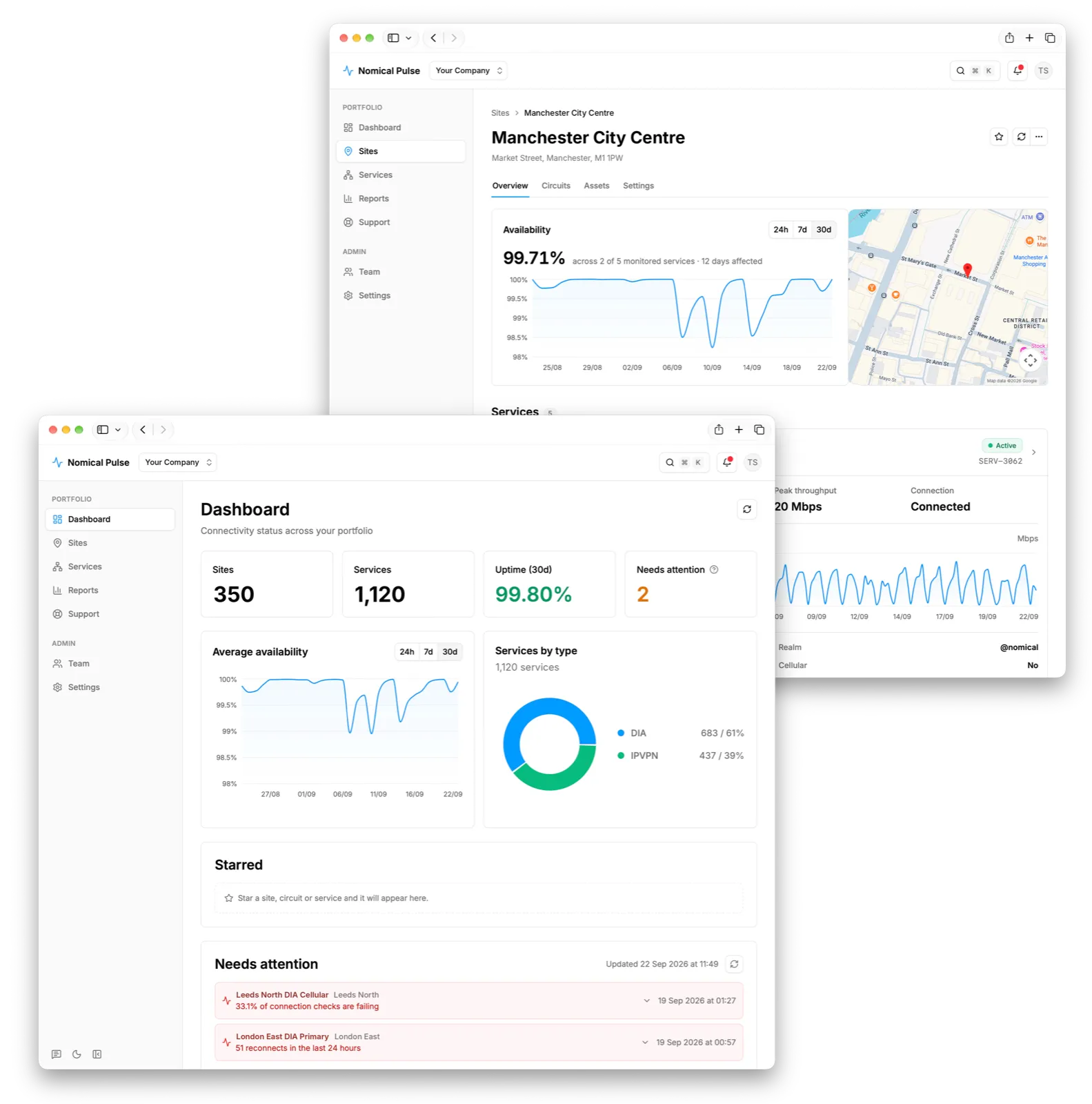
Our own monitoring platform brings every line at every site into one dashboard, whichever carrier supplies it, backup connections included. Your IT team can see exactly how your connectivity is performing and spot problems as they happen, not when someone complains.
real-time visibility
Live availability, throughput and performance for every site, service and circuit.
instant fault alerts
We know the moment a line drops or starts to struggle, and so do you.
automated fault resolution
Common faults are fixed automatically, with clear guidance on anything that needs a person.
every carrier in one place
Lines from different carriers, plus your backup connections, all in one view.
raise tickets in seconds
Log a fault straight from the affected line. We already know which site and service it is, so there’s no back and forth.
your own login
Check how every site is doing, any time, from any device.
network health check
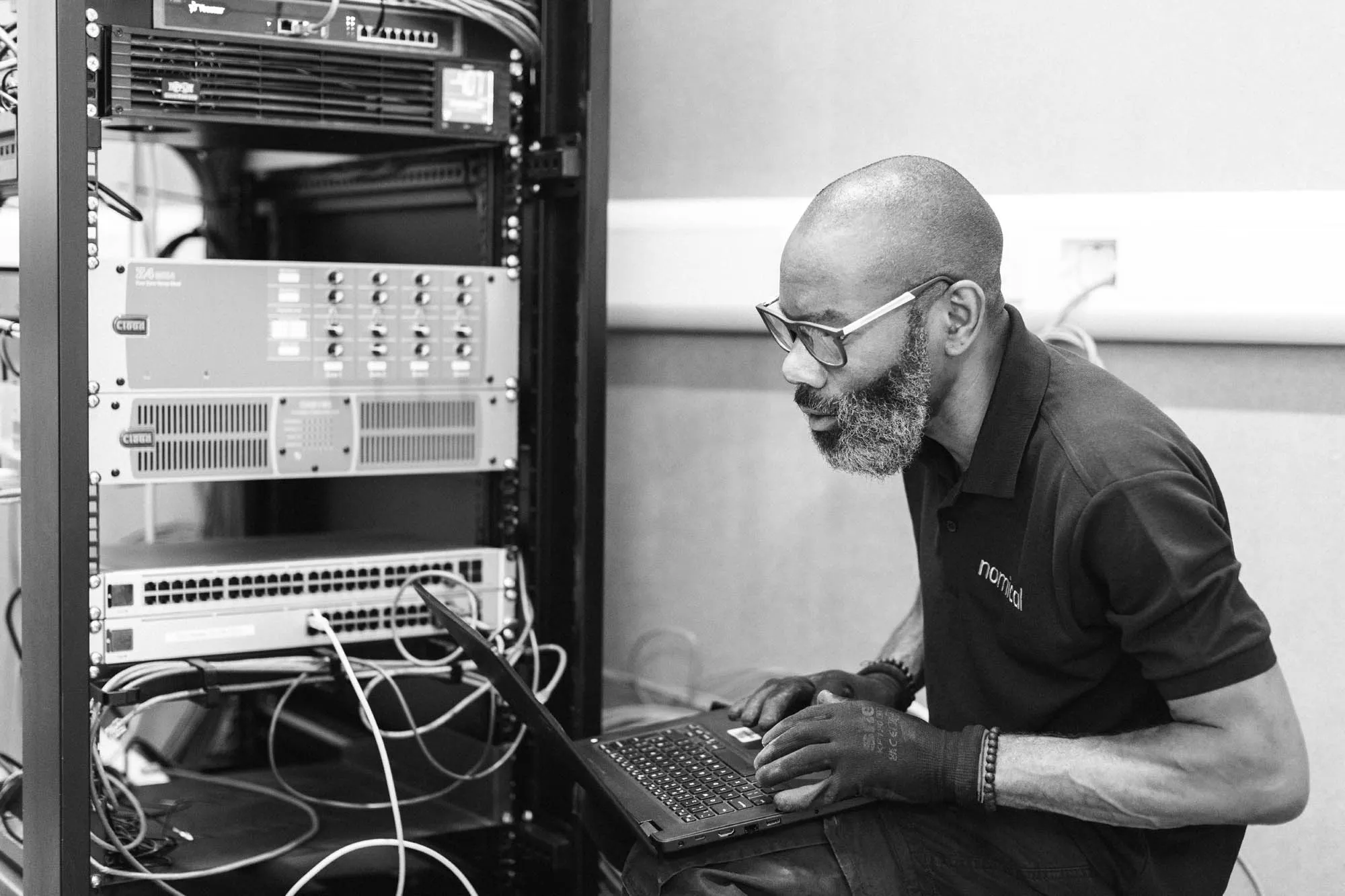
If your network is slow, unreliable or simply undocumented, our network health check gets to the bottom of it. We connect a small monitoring device to your network, map everything on it and use AI-assisted analysis to spot issues such as misconfigured equipment, bottlenecks, unknown devices and out-of-date firmware.
You get a clear network diagram and a plain-English report with practical recommendations to fix what we find.
book a network health checkthe digital switchover
is your business ready for the PSTN switch-off?
The UK’s old copper phone network is being switched off, with the move due to finish by January 2027. It affects more than phones: alarms, card machines, lift lines and older broadband can all rely on it. We’ve helped businesses move hundreds of sites off old lines, and we’ll help you find what’s affected and plan a smooth switch.
contact us about your linesit’s not just phones
- alarm lines
- card machines
- lift emergency lines
- door entry systems
- older broadband


“Nomical is a reliable and professional partner for IT infrastructure solutions. They have delivered high-quality service and support for our business, always meeting our deadlines and expectations.”

17 years
with PureGym and The Gym Group, from their very first sites
1,000+
sites connected and monitored
winner
Best MSP for Multi-Site Operators 2025
Global Tech Insider Awards
frequently asked questions
What is Pulse, and do I get access?
Pulse is our own connectivity monitoring platform. Every client gets a login, so you can see the same view we do: every site, every line and how each one is performing, in one place.
What is SD-WAN, and does my business need it?
SD-WAN is a smarter way to manage your connections. It combines several lines, such as a leased line, broadband and 4G, and sends each app down the best one. It’s most useful for businesses with several sites, or any site where staying online really matters.
How long does a leased line take to install?
Leased lines usually take several months to install, and sometimes longer if new fibre or groundwork is needed. One of the most common hold-ups is a wayleave: permission from your landlord or a neighbouring landowner to run cables across their property. Sorting this early helps keep things moving. In the meantime, 4G, 5G or Starlink can get your site online, so you’re not left waiting.
How long does it take for a new site to go live?
That depends on the connection. A fixed line such as a leased line can take several months, especially if a wayleave or groundwork is needed. That doesn’t mean waiting to open, though. We carry out a site survey to work out whether 4G, 5G or Starlink is the best fit, then install it so your site is online from day one. Once the fixed line is in, the temporary connection can stay on as a backup.
What’s the difference between FTTP and FTTC?
With fibre to the cabinet (FTTC), fibre runs to the green street cabinet and copper covers the last stretch to your building. Fibre to the premises (FTTP) runs fibre all the way, so it’s faster and more reliable. Traditional FTTC relies on a phone line, so it’s being replaced by SoGEA and FTTP as part of the PSTN switch-off.
Is Starlink good for business?
For the right sites, yes. Starlink works well in remote locations, places with weak mobile signal, and as a backup that doesn’t share cables or exchanges with your main line. We carry out a site survey first to check whether Starlink or 4G/5G is the better fit.
Broadband or a leased line: which do we need?
It depends on how much your site relies on its connection. Broadband is shared with other users, costs less and suits most smaller sites. A leased line is dedicated to your business, with the same upload and download speeds and stronger service guarantees, so it’s the right choice for busy sites where staying online really matters. Many businesses use a leased line at their head office and broadband at smaller sites.
What happens if our main line goes down?
If you have a backup connection, your site switches to 4G, 5G or satellite automatically and keeps working. At the same time, Pulse alerts our team, so we can start working on the fault straight away, often before you’ve noticed anything’s wrong. For critical sites, a second fixed line from a different carrier adds even more protection.
What carriers do you use?
We work with a wide range of UK carriers, including BT, Virgin Media and Sky, as well as alternative network providers (alt-nets) building their own full fibre networks. For remote sites and backup, we add 4G, 5G and Starlink. Because you’re not tied to one carrier, we can choose the best connection for each site based on availability, speed and cost, and mixing carriers gives you real resilience. Whichever carriers supply your lines, you can see them all in one place with Pulse.